Mia Peters · 4 October 2026
Exploring Retention Factors for Active Users on Specialized Content Sharing Sites
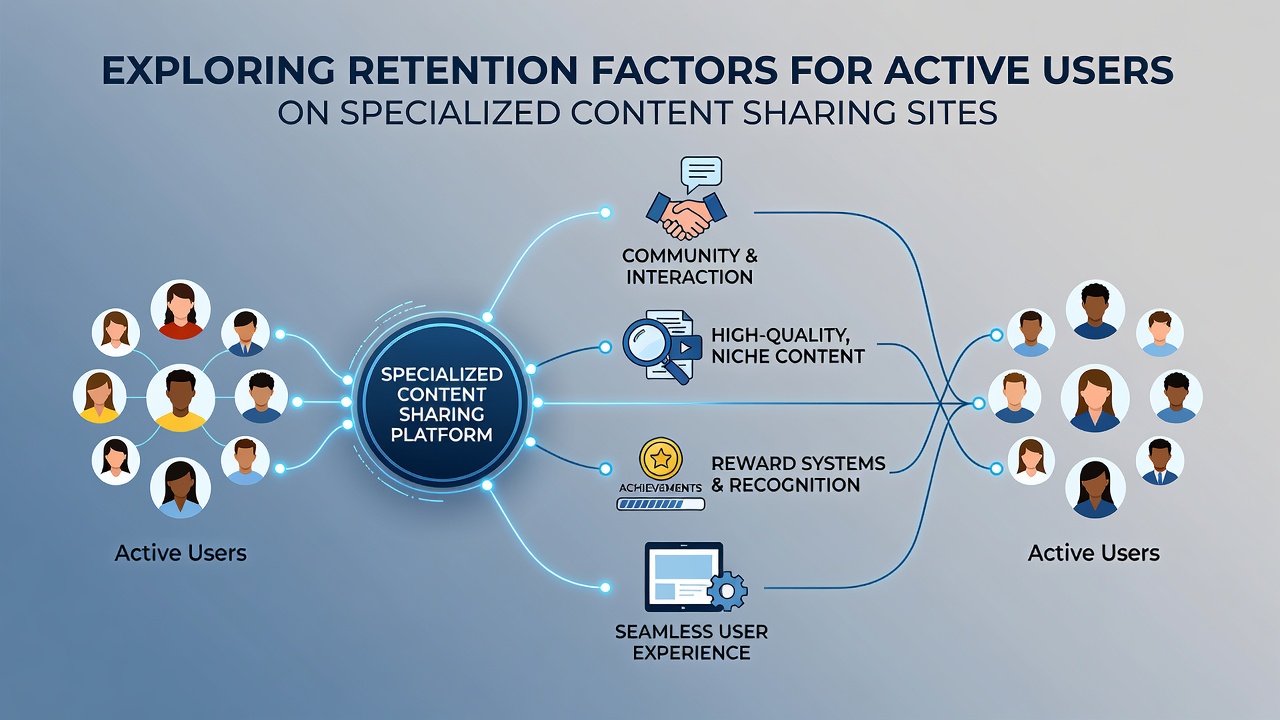
Specialized content sharing sites operate in competitive digital environments where retention of active users depends on measurable elements such as engagement mechanisms, platform features, and data-driven adjustments. Researchers track these patterns through longitudinal studies that examine user behavior across forums, repositories, and niche networks. Data collected from multiple regions shows consistent correlations between specific site attributes and continued participation rates.
Community Interaction Structures
Community features drive retention when they enable direct contributions and responses, and platforms that implement threaded discussions alongside reputation systems record higher return rates. Studies from academic institutions indicate that users who receive replies within the first 24 hours demonstrate increased session frequency over subsequent weeks. One analysis of European platforms revealed that moderated groups with clear guidelines maintained 18 percent higher activity levels compared to unmoderated counterparts, while similar patterns appeared in North American data sets released during 2025.
Notification systems integrated with these structures further influence outcomes. Users who opt into targeted alerts about new replies or related uploads show extended platform tenure, and figures from industry reports confirm that personalized triggers outperform generic broadcasts by substantial margins. Platforms adjust these settings based on aggregate metrics rather than individual assumptions, which supports sustained participation across diverse content categories.
Personalization and Content Discovery
Algorithms that surface relevant material based on prior interactions contribute to retention by reducing search friction, and specialized sites that refine recommendation engines monthly achieve steadier user cohorts. Research indicates that accurate matching of content to user history correlates with lower bounce rates during initial visits, and this effect compounds when sites incorporate feedback loops that allow quick adjustments. In October 2026 the OECD published updated digital economy statistics that highlighted personalization as a recurring variable in retention models across content platforms in member countries.
Search and tagging tools complement these systems by organizing material into accessible categories. Users on sites with robust metadata structures spend more time exploring archives, and evidence from multiple platform audits shows that comprehensive tagging reduces exit points during browsing sessions. Those who study retention patterns note that discovery features perform best when combined with community signals such as upvote counts or curation lists.

Technical Performance and Accessibility
Load times and mobile compatibility affect whether active users return after their first sessions, and platforms that maintain sub-three-second response rates across devices record improved retention statistics. Data from regulatory bodies in Australia and Canada demonstrate that accessibility compliance, including screen reader support and keyboard navigation, expands user bases while supporting continued activity among existing participants. Updates implemented in response to these benchmarks produce measurable lifts in daily active user counts.
Security measures also factor into long-term engagement. Sites that deploy transparent data handling practices and two-factor authentication options experience fewer account abandonments, and cross-regional comparisons show that clear policy documentation correlates with higher trust indicators in user surveys. Observers track these elements through periodic audits that feed into iterative platform improvements.
Content Moderation and Quality Controls
Moderation policies that balance openness with guideline enforcement help retain users who value consistent environments. Platforms applying tiered review processes report sustained contribution levels, and quantitative reviews from research institutions link proactive content curation to reduced churn among frequent posters. When moderation teams publish outcome summaries, participant confidence rises and session durations extend accordingly.
Quality signals such as verified uploads and editorial highlights further shape retention trajectories. Sites that surface high-performing material through featured sections attract repeat visits, and aggregate data sets confirm that visible quality markers guide user navigation patterns toward productive interactions. These approaches operate alongside analytics that identify drop-off points and inform targeted refinements.
Conclusion
Retention on specialized content sharing sites emerges from interconnected factors including community tools, personalization engines, technical standards, and moderation frameworks. Reports compiled through 2026 continue to map these variables across geographic contexts, providing platforms with evidence-based pathways for supporting active user cohorts. Ongoing measurement allows sites to align features with observed behaviors while maintaining operational consistency.